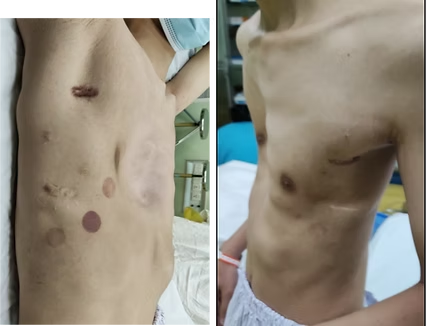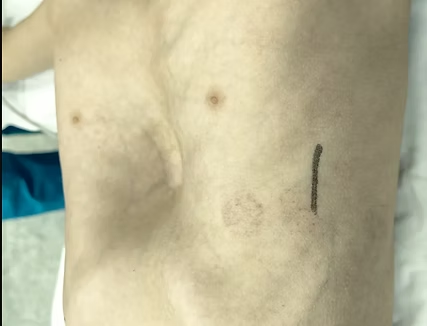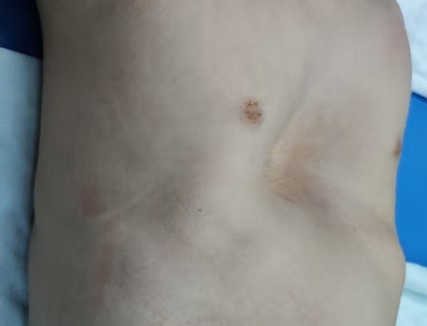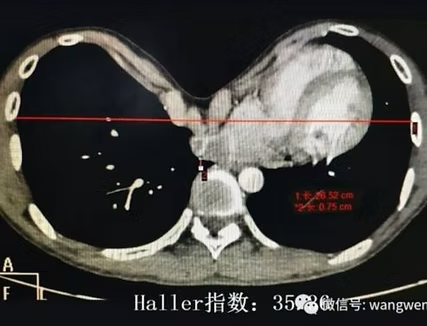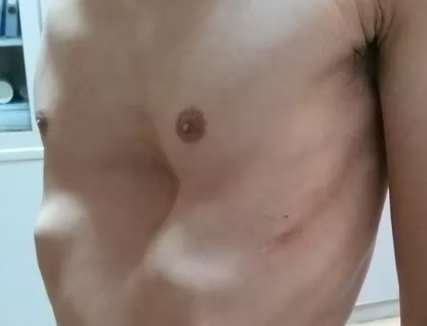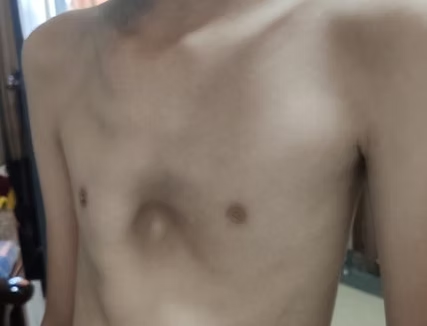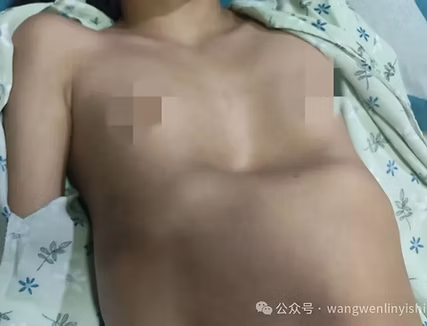
Pectus excavatum is a common congenital chest wall deformity, characterized by an inward depression of the lower and middle parts of the sternum and its adjacent ribs, forming a funnel-like shape. The deepest part of the depression typically resides superior to the xiphoid process.
Introduction
Causes
The exact cause of pectus excavatum remains unclear, but the genetic factor is believed to be involved. Additionally, delayed development of the diaphragm behind the sternum during embryonic growth, or excessively rapid growth of the costal cartilage below the sternum, might also exert a pulling force on the sternum, ultimately leading to an indentation of the anterior chest wall.
Symptoms
Mild pectus excavatum typically does not lead to serious health issues or symptoms. However, in severe cases, the indented chest wall can compress the heart and lungs, causing symptoms like palpitations, shortness of breath, and breathing difficulty. Additionally, patients may experience a loss of appetite, indigestion, delayed growth, frequent upper respiratory infection, and increased psychological stress.
Meanwhile, pectus excavatum can also lead to scoliosis, a condition that is more common in patients with severe deformity or those who have had the condition for many years.
Diagnostic Methods
Diagnosis involves assessing the patient’s clinical manifestations and physical signs, along with imaging examinations such as X-ray, chest CT scan, and electrocardiogram.
Surgical Procedures
This new generation of minimally invasive procedure is specifically designed for pectus excavatum, with operating principle and surgical steps entirely different from traditional procedures like the Ravitch procedure and the Nuss procedure. This innovative procedure offers several key advantages, including minimized trauma, a shorter recovery period, and most importantly, effective prevention of heart damage. It is particularly suitable for young patients under the age of 5, and the surgical results are more stable and long-lasting.
This new surgical method was developed to improve the defects of the Nuss procedure. While both procedures are based on similar fundamental operative principle, the Wung procedure incorporates numerous innovations and optimizations at every step, including safer and simpler bar placement and fixation techniques. These innovations not only substantially enhance the safety, reliability, and effectiveness of surgery but also greatly reduce the incidence of complications and shorten the patients' postoperative recovery period.
Frequently Asked Questions
No, pectus excavatum does not improve on its own with age. In fact, it may progressively worsen. This is particularly evident during puberty, when rapid growth can cause the chest depression to become more severe in patients who had only a mild deformity in childhood. This deepening depression compresses the heart and lungs, leading to symptoms such as palpitations, shortness of breath, and even difficulty breathing.
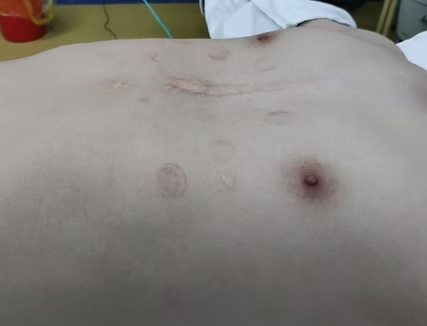
Typically, 2 small incisions are made, one on each side of the chest. For younger children receiving the Wang procedure, the surgery is usually performed through a single incision in the middle of the chest.
In most cases, 1 to 3 bars are required. The exact number depends on the patient’s condition and the surgical plan.
In most cases, the deformity is significantly corrected right after the procedure, resulting in a chest wall that appears close to normal. Following this initial correction, the chest continues a process of slight, gradual remodeling over time. The new contour is typically well-established within about 3 months and fully stabilizes after 2 to 3 years.
No, significant improvement in respiratory function is not immediate. It is common for patients to experience no initial change or even a temporary decline in breathing capacity following the procedure. This is a normal postoperative response, attributable to the chest wall being stabilized by the bar, the body's need to adapt to the new thoracic configuration, and discomfort from the surgery itself. Typically, noticeable and sustained improvement becomes apparent after 2–3 months of active respiratory rehabilitation exercises.
The total cost usually ranges from $10,000 to $15,000. The exact amount will be determined by factors such as the patient’s condition and the specific surgical plan.
It is common to experience significant pain in the initial postoperative period, particularly among adolescent and adult patients due to their more rigid skeletal structure. Our hospital employs a comprehensive, multi-modal analgesia protocol to ensure effective pain control. This integrated approach includes:
- Intraoperative Intervention: Intercostal nerve blocks are administered to prevent pain signals from transmitting.
- Postoperative Medication: Continuous pain management is delivered through a patient-controlled analgesia (PCA) pump, supplemented with scheduled intravenous analgesics.
- Adjunctive Rehabilitation Therapy: Our dedicated rehabilitation team provides personalized physiotherapy, incorporating techniques such as acupuncture, therapeutic massage, electrical stimulation, and ultrasound therapy. These modalities are highly effective in alleviating localized pain and common discomforts like postoperative bloating.
Most patients stay in the hospital for around 7 days, although the actual duration depends on individual recovery.
The risk is very low. The bars used in surgery are made of titanium alloy, which provides excellent rigidity and resistance to deformation. In addition, the Wang Technique, a cutting-edge bar fixation method, is utilized during surgery to rigidly stabilize the bars in position, effectively preventing movement. Long-term clinical data confirms that the vast majority of patients do not experience bar displacement or deformation. It is crucial to note that during the early postoperative period (within the first 3 months), patients should avoid vigorous exercise and be mindful in their daily lives to avoid significant impact or trauma to the chest, thereby reducing the likelihood of bar displacement.
The bars implanted in the Nuss procedure, the Ravitch procedure, and the Wung procedure may affect the normal development of the chest wall to some extent and need to be removed at the appropriate time. However, in the Wang procedure, the bar is fixed to the surface of the bony structure and therefore does not significantly impact development.
Most patients can get out of bed and walk within 3–4 days after surgery, and resume daily activities around 10 days postoperatively. Patients can usually return to normal work or school (excluding heavy physical labor) around 1 month. Light exercise, such as jogging or hiking, can start within the first three months, with intensity gradually increased thereafter.
It is crucial to note that if you encounter any discomfort, such as chest pain or shortness of breath, during exercise, you should stop the activity immediately. If necessary, a chest X - ray or CT scan can be arranged for further examination.
Yes, for the initial postoperative period, maintaining a specific sleeping position is important for healing. It is advised to sleep in a supine position (lying on your back) or a modified lateral position (partially reclining on one side) for the first month, adjusting as needed for comfort around the incision sites. Additionally, you need to avoid movements with a large range of motion, like chest expansion, bending over, and lifting heavy objects. After about a month, once your incisions have completely healed, you can gradually start sleeping on your side.
After the drainage tubes are removed (the removal time is determined by the drainage volume and follow - up examination results, generally within 1 - 2 weeks), you can take a shower with the wound covered by waterproof dressings. After finishing the shower, replace the dressings with breathable gauze to protect the wound. Around 3 weeks after surgery, once the incisions have completely healed, you can take a normal shower.
Our discharge protocol is designed to ensure your safety. Typically, patients can be safely discharged 10 - 14 days post-surgery. After continuing to observe for about one week post - discharge, the risk of the vast majority of complications can generally be excluded. If recovery progresses smoothly during the first three weeks post-surgery, the likelihood of later complications is extremely low. Additionally, the bars are firmly secured, and the surgical technique is specifically designed to prevent issues like bar displacement.
However, if you notice symptoms such as pneumothorax, pleural effusion, significant pain, or poor wound healing, please contact our doctors promptly. In case of an emergency, please seek immediate care at a local hospital.
If your recovery goes well without any noticeable discomfort or abnormal conditions, regular follow-up is usually not required. However, if you develop symptoms such as persistent high fever (temperature >38.5°C), sudden chest tightness, shortness of breath, or difficulty breathing, please have a chest X-ray or CT scan locally and consult a thoracic surgeon or our doctor for further guidance.
For bar removal, patients with pectus excavatum typically have the bars removed around 3 years after surgery. For patients who received the Wang procedure, bars are usually removed 18 – 24 months after surgery. The exact timing depends on your recovery and the doctor’s evaluation.
Yes. Upon discharge, we will provide a discharge summary and a medical certificate. If airport security raises any concerns, presenting these medical documents will facilitate your passage.
In most cases, taking a flight does not cause discomfort, you can travel with confidence.
Optimal nutrition is crucial for healing. We recommend the following dietary plan, tailored to your recovery phase:
Initial Phase (during bed rest): Choose easily digestible semi-liquid foods, such as porridge, juice, or well-cooked noodles.
Recovery Phase (once able to get out of bed): Gradually resume a normal, balanced diet with an emphasis on high-quality protein sources such as fish, chicken, and eggs. Make sure to eat fresh fruits and vegetables daily to supplement vitamins and electrolytes.
Precautions: Strictly avoid spicy and greasy foods, and be cautious with foods that may trigger allergies, such as seafood or mangoes.